Risk
Volatility Clustering And Portfolio Risk: Smart Insights
By tomharris
December 18, 2025
Field Notes
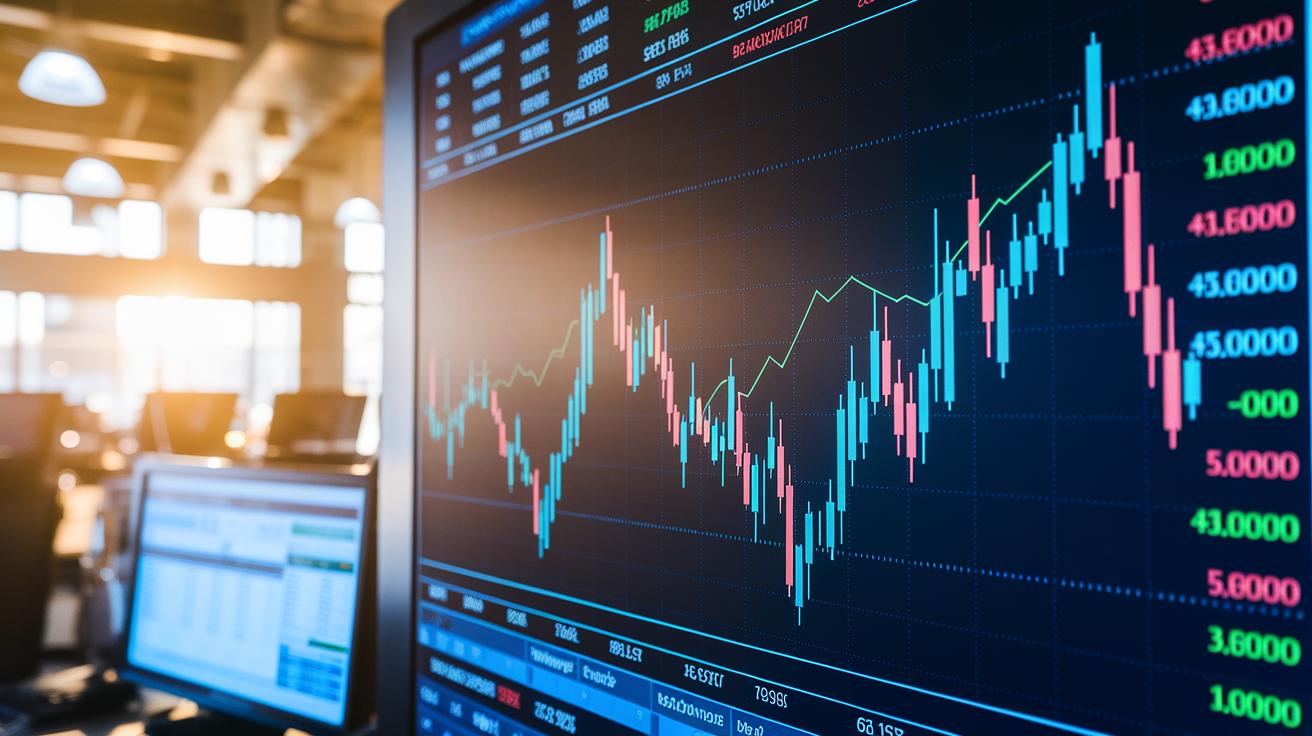
Ever wonder why a calm market can suddenly become a whirlwind of action?
Imagine driving on a smooth road when, all of a sudden, you find yourself stuck in a heavy jam. That’s what we call volatility clustering in the market, big moves that group together in ways you might not expect.
When these strong shifts pile up, standard tools like the Sharpe ratio (a method that compares return to risk) might miss some hidden dangers. Smart investors know to look for these patterns so they can better protect and manage their money.
This article explains how you can keep your investments safe, even when the market surprises you with sudden changes.
How Volatility Clustering Influences Portfolio Risk Management
Sometimes, market movements act like surprise traffic jams. You get a series of wild price swings, then a stretch of calm, all in one go. This is what we call volatility clustering. In simple terms, when one big move happens, more often than not, another follows soon after, just like one traffic jam hinting that more might be on the way.
Our usual risk tools often assume things are steady. So, when unexpected clusters occur, these tools might miss a sudden surge in risk, skewing key numbers like the Sharpe ratio (a measure comparing return to risk). Think of it like noticing Brazil’s volatility at 95% compared to the U.S.’ 91%, small differences that can mean a lot when wild swings group together.
• Volatility clustering means that periods of big and small price changes tend to stick together rather than appearing randomly.
• This grouping can change risk metrics; for example, steady measures like the Sharpe ratio might show odd figures, such as 2.91 for the S&P 500 on 9/28/2024.
• That's why risk models need to be flexible, they must adjust to the natural ups and downs rather than assuming a constant, calm market.
For portfolio managers, spotting volatility clustering is key to avoiding the pitfalls of a too-simple risk check. By shifting models to mirror how the market actually behaves, they can spread out investments better and react faster to sudden changes. In the end, a more dynamic approach to risk helps keep investments safe, even when market conditions shift unexpectedly.
Modeling Volatility Clustering with Econometric Forecasting Techniques

When the market gets unpredictable, ARCH and GARCH models help us make sense of the changes. ARCH stands for autoregressive conditional heteroskedasticity (in simple terms, it looks at past price shifts to guess if big swings might show up again). Think of it like recalling a rainy day and expecting more rain soon. GARCH builds on that idea by mixing past price changes with its own earlier predictions, giving you a fuller picture. It works a bit like watching a river that sometimes speeds up, then slows down, and then picks up again.
Next, there is model risk calibration. That just means fine-tuning the model so its forecasts match real market behavior. Sometimes, adding too many details can make predictions murky instead of clear. For example, the proprietary CALM model pulls together both within-day and across-day data and ended up with twice the correlation compared to traditional GARCH tests. This simple, yet effective approach meets strict standards and can help build an optimal mix for your portfolio without overcomplicating things.
| Model | Definition | Key Feature |
|---|---|---|
| ARCH | Looks at past price swings to predict future changes | Focuses on short-term movement |
| GARCH | Merges previous errors and swings to forecast volatility | Captures trends over a longer period |
| EGARCH | Adjusts predictions by handling uneven market returns | Effectively deals with non-linear behavior |
Empirical Evidence of Volatility Clustering in Financial Markets
Recent research on the S&P 500, EURO STOXX 50 (from 2007 to 2019), and 21 different currency pairs (between 1997 and 2019) shows that price changes aren’t random. Instead, busy periods and calm periods tend to stick together, kind of like waves in a steady ocean. One study even found that a method called CALM matched real market swings twice as well as older models like GARCH.
And there’s more. Machine-learning tools that looked at up to 147 different data points have outdone the old HAR models in spotting these clusters. For instance, markets such as Brazil, which show about 95% volatility, behave differently from steadier ones like the United States at around 91%. You can read more about these findings in the Quantitative Portfolio Risk Analysis link. It turns out that these advanced models find small patterns in the rapid flow of market data, offering fresh insights into risks.
Today, when experts assess portfolio risk, they lean on studies like these. Recognizing groups of price changes is key for predicting sudden market moves (or tail events) and everyday shifts. This evidence is pushing us toward flexible, dynamic risk models that hold strong even when markets get a bit wild.
Statistical Methods for Detecting and Measuring Volatility Clusters

When it comes to understanding market ups and downs, modern risk checks use smart ways to see what’s really happening. Analysts mix quick, high-frequency data with clever computer instructions (algorithms that help us solve problems) to create daily risk measures. They use a blend of old and new methods to plan for different situations and spread out risk, making sure their outlook goes beyond just looking at average changes from the past.
Realized Volatility Techniques
These techniques gather lots of little pieces of data throughout the day and roll them up into one clear daily snapshot. It’s like snapping many quick pictures of the market and putting them together into a neat story. By comparing these detailed moments (using correlation matrix analysis, which is just a smart way to compare groups of numbers), every small twist in prices is caught. A tiny change in one hour might even signal a bigger trend later on, helping managers adjust their plans to keep investments safe. For more details on this method, check out Stock Market Analytics at the provided link.
Machine Learning Approaches
Machine learning takes the idea even further by using a whole bunch of data points to find tricky patterns that older models often miss. This approach uses many features (pieces of information) and compares them with techniques like correlation matrix analysis to build smart risk measures. By looking at hundreds of details, these models sharpen predictions, giving a much clearer view of where the market might head next.
Cluster Detection Methods
Cluster detection helps us see groups of high or low market swings and shows that these groupings aren’t just random. Using tests like ARCH LM and the Ljung-Box test (which check if unusual groupings exist), analysts confirm that periods of high or low volatility tend to stick together. They then mix these results with more number comparisons to pinpoint exactly when risks pile up. This extra clarity helps managers make better decisions and protect their investments even when the market gets wild.
Risk Mitigation Strategies under Volatility Clustering
Volatility clustering can make standard risk measures seem off. That’s why portfolio managers count on smart risk management tools to keep investments secure. When market swings come in groups, regular models might miss sudden spikes. In those moments, managers rely on risk models that adjust in real time to spot emerging problems.
They also use advanced methods such as risk parity and options strategies with Greeks (tools that help measure options sensitivity) to get a clearer view of where risk is building up.
Changing the portfolio on the fly is key to protecting capital during these clustered periods. For example, one study showed that by using volatility scaling, the U.S. equity Sharpe ratio (a measure of return versus risk) jumped from 0.40 to 0.51, while volatility dropped from 4.6% to 1.8%. Techniques like these, along with targeting a mid-market volatility range (as seen in the Research Affiliates Global Multi-Asset Index or RAGMAE), work together to guard a portfolio through wild market shifts.
- Risk parity
- Volatility scaling
- Options hedging
- Dynamic hedging
Investors using defensive strategies also depend on these tools. They take advantage of smart risk assessments (for example, check out Portfolio Risk Assessment Methods on https://teafinance.com?p=1053) to balance risk evenly across different asset classes. This approach helps the overall portfolio handle groups of price swings more effectively.
When it comes to checking portfolio risk, dynamic hedging and capital preservation go hand in hand. By continuously tweaking asset allocation and using flexible hedging methods, investors can better navigate periods of clustered volatility and build a more resilient portfolio.
Portfolio Diversification and Dynamic Allocation in Clustered Markets

Investors lower their risk by mixing investments and adjusting them along the way as market conditions change. They pick assets thoughtfully and rebalance their portfolios often to soften market swings. For instance, the Thrivent Moderately Aggressive Allocation Fund showed less volatility than the S&P 500, with a beta of 0.82 over three years ending March 31, 2024. Tools like "Understanding Beta in Market Risk" (which explains how quickly an asset responds to market changes) help managers see how investments act during clustered market moves.
Managers keep a close eye on how different investments move together and adjust the weight of each one as needed. They conduct real-time checks to make sure that no single asset or sector risks too much. One study found that a fund dropped by 15% during wild market swings, but smart diversification and timely rebalancing trimmed that loss to just 7%.
Looking at special case studies, it's clear that spreading out investments in clustered markets creates a strong safety net. Ongoing reviews of how assets correlate and perform mean that adjustments happen quickly, helping to lower risk and ease the impact of sudden market shocks.
Final Words
in the action, we explored how volatility clustering shapes portfolio risk and the need for smart risk management. We talked about modeling techniques, empirical market data, and strategies that adjust to sudden shifts in asset prices. Each section helped show ways to secure everyday investments and guide long-term growth. The insights from advanced econometric methods remind us that understanding market fluctuations can make managing your money feel more straightforward and secure. Keep taking steps forward, and remember, every challenge brings a bright chance to gain better control.
FAQ
What are some common resources available on volatility clustering and portfolio risk?
The query about resource types shows that you can find PDFs, formulas, examples, and calculators designed to illustrate volatility clustering’s role in portfolio risk management.
What is volatility clustering?
The definition of volatility clustering tells us that it is the pattern where periods of high or low asset price fluctuations occur back-to-back, influencing how portfolio risk is evaluated.
What is the risk of volatility in a portfolio?
The explanation of portfolio volatility risk points out that frequent, large price swings can boost uncertainty and potential losses, making dynamic risk management essential.
What does Warren Buffett say about volatility?
The perspective from Warren Buffett suggests that volatility isn’t bad in itself; he sees market fluctuations as chances for long-term investors to acquire quality assets at attractive prices.
What is the relationship between risk and volatility?
The relationship between risk and volatility shows that increased fluctuations in asset prices tend to raise overall investment risk by adding uncertainty to portfolio returns.