


Have you ever wondered if a computer can guess tomorrow's market moves better than a person can? AI is changing the game by making trades in a split second and using smart info (details that help you understand patterns) to beat old, slow methods. Imagine a buddy who quickly goes through loads of numbers, finds hidden signals, and helps steer your investment decisions. In this post, we’ll explore how AI changes trading, analysis, and predictions, giving you a faster and smarter way to manage your money.
How AI Enhances Stock Market Trading, Analysis, and Forecasting
Long ago, market analysis used public news and consumer trends to guess where prices were headed. Investors had to rely on the same basic information that everyone could access, kind of like reading the same newspaper as every other trader. But we now know that, because share prices reflect all available public data, beating the market consistently is really hard.
Now, imagine having a friend who can skim through millions of data points in a snap. That’s what AI does. It picks out hidden patterns in the data that we often miss, offering a new way to see market trends.
AI is changing the game in three big ways. First, AI-driven systems can make trades almost instantly, skipping the delays we see with old-fashioned, manual methods. Next, smart tools crunch huge numbers to spot new chances like sifting through the day's sales at your favorite shop. Finally, advanced models predict price trends (sort of like a weather forecast for stocks), guiding investors in making decisions.
All of this makes AI a powerful ally for anyone looking for smarter ways to manage stock market investments.
Evolution of AI in Stock Markets: From Quantitative Trading to Deep Learning

Back in the day, from the 1960s to the 1980s, stock trading was a bit like putting together a puzzle using giant mainframe computers and simple math models. It was as if you were using a basic calculator to sort lots of numbers, where every number was a little brick helping to build an idea of where the market might be headed.
Then things got interesting. In the 1990s and 2000s, more advanced tricks like statistical learning, neural networks (computer programs that mimic the human brain in a simple way), and support vector machines (tools that help spot patterns) came into play. These tools began to hint whether market trends might be rising or falling.
By the 2010s, deep learning and natural language processing stepped in, letting computers not only predict prices but also pull fresh insights from social media and other sources. It was like having a tech-savvy assistant that could read digital signals while you enjoyed a coffee.
Today, in the 2020s, AI handles everything from checking real-time signals to spotting fraud and making sure all rules are followed. Imagine a diligent helper that watches over every market move, so you can feel confident that decisions are based on clear, reliable data.
AI-Powered Stock Analysis Methods and Algorithms
Using AI to analyze stocks means using really smart tech to sort through huge amounts of data that influence trading every day. These systems are changing the game by learning from past numbers and predicting market trends like a pro.
They mix quick investment predictions with deep learning (a method that helps computers learn from lots of information) to connect technical data with real business facts. The result? It quickly spots when stock prices might jump or fall. Because these tools use smart, step-by-step methods, they give clear insights that help you make better trading choices.
| Method | Description |
|---|---|
| Historical Pattern Recognition | Looks through millions of past prices to spot trends that usually occur before market shifts. |
| Sentiment Analysis (via NLP) | Checks news, social media posts, and reports to pick up on a positive or negative vibe that could affect stock prices. |
| Anomaly Detection | Alerts you when there’s an unusual jump in trading volume or sudden price changes that might signal big moves. |
| Predictive Modeling | Merges technical data and business fundamentals to forecast short-term price trends and help with quick decisions. |
| Portfolio Optimization | Takes into account how stocks move together and their ups and downs to help balance your investments with your risk comfort. |
Analytics engines,
Real-World AI Applications in Stock Market Investing
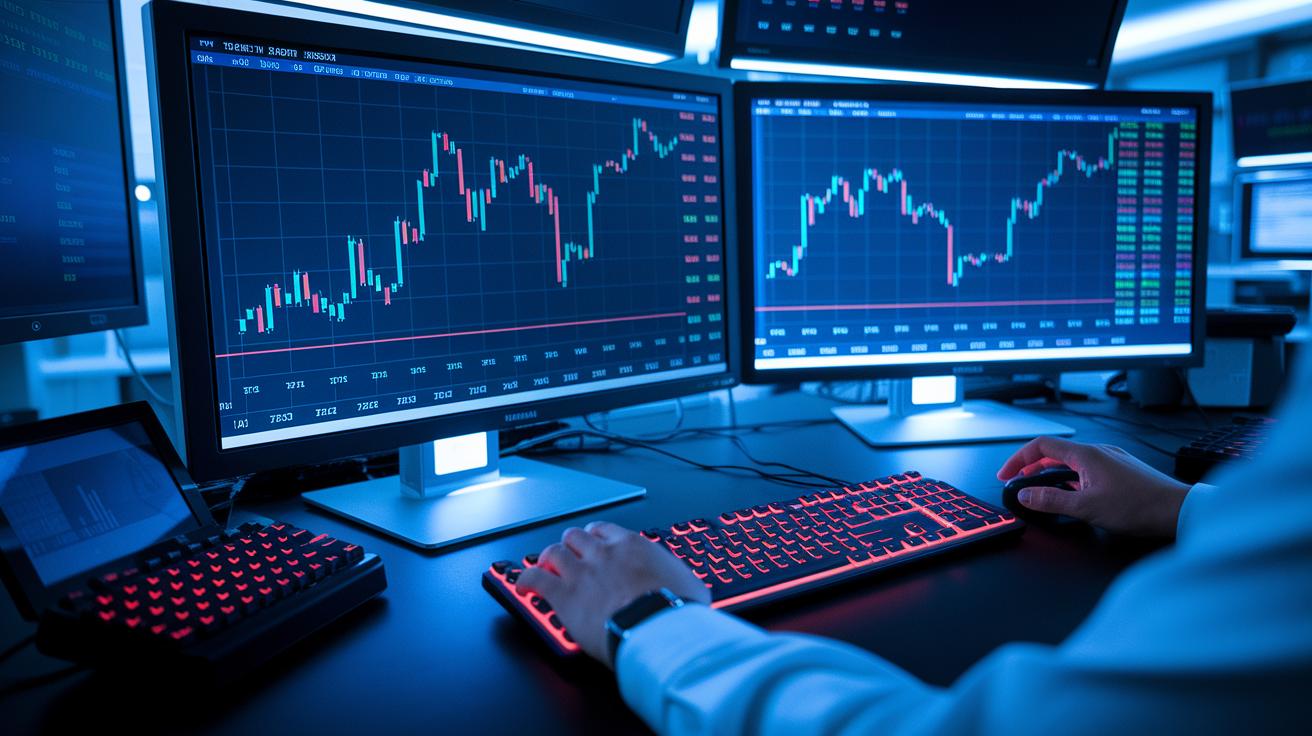
AI is changing how we invest in stocks by making trading faster and more accurate. Imagine the smooth click of a secure login as automated systems use live market data to process orders almost instantly. Smart investment bots constantly update their strategies by learning from fresh data (new, updated information), which helps them avoid mistakes driven by emotions like fear or greed. Because of these tools, platforms can react quickly to breaking news and sudden market changes, giving investors a real advantage over old-school methods.
Investors now see how digital advisory tools and smart data analysis are reshaping portfolio management. Modern systems can build your portfolio automatically and fine-tune it as needed, all by using insights from continuous learning. This means trades happen efficiently and without the stress of emotional decisions while always adapting to the latest market trends.
Robo-Advisory Platforms
Robo-advisory platforms build and adjust your investment portfolio automatically. They keep a close eye on things by using smart rules (step-by-step instructions) that make sure your investments match your comfort with risk and the latest market moves, all without any personal bias.
High-Frequency Trading Algorithms
High-frequency trading algorithms are like speed racers that execute orders in tiny fractions of a second using current market information. These systems watch market changes closely and make fast decisions, making it easier for trading firms to buy or sell in a flash.
Benefits and Risks of AI in Stock Markets
AI is changing the way we trade stocks by making complex analysis simpler and cutting down the time spent on research. It smoothly goes through heaps of numbers, spotting trends so you don't have to sift through endless reports. This speedy process not only boosts efficiency but also helps you keep a steady and thoughtful approach to your investments.
But, like any tool we use, there are risks too. Over-relying on AI might lead to surprises, such as sudden market drops, much like that dramatic flash crash back in 2010 when the Dow sank in mere minutes. And if the information fed into the system isn’t top-notch, it might give you misleading advice. The trick is to see AI as a helpful sidekick while you keep a careful, personal eye on your financial decisions.
| Benefit | Description | Risk | Example |
|---|---|---|---|
| Faster Research | Quickly analyzes huge amounts of data | May react unexpectedly | 2010 flash crash |
| Unbiased Decisions | Removes emotional bias in trading | Quality of data can affect outcomes | Skewed market signals |
| Enhanced Portfolios | Helps spread out investment risks | Miscalculates when data is off | Algorithm-based errors |
In short, balancing these advantages and caveats is key. AI’s ability to speed up research and remain free of emotion gives a fresh edge to market analysis. Still, it pays to stay alert and use your own judgment alongside these smart tools, you deserve a well-grounded, secure approach to managing your money.
Future Trends and Challenges for AI in Stock Market Operations
AI is moving fast with new ideas that change how we trade stocks. New types of AI can now create fake but useful data (kind of like a sample) that helps train smarter models and simulate real market conditions. These new trading tools use huge amounts of information and clever methods to help with everything from spotting trends to making trades. Imagine a system where every trade feels connected, with decisions made almost instantly. It’s exciting because these improvements make AI more helpful and easy to use, giving traders a smoother experience. This shift is part of a bigger change in finance where technology is slowly replacing old ways of investing.
One big challenge is making sure the data used is good and follows the rules. It’s tough to get data that is fair and accurate because even a little mistake can lead to wrong predictions. At the same time, new rules mean companies need to show clearly how their systems work and be ready to check them. Lawmakers want clear, fair ways of managing these smart tools so they act responsibly. Balancing new ideas with solid rules is key to earning our trust in these AI trading systems. That careful approach helps protect your investments while still offering the fast and accurate benefits of AI.
Final Words
In the action of modern markets, this post illustrated how AI transforms trading by streamlining data analysis, predictive forecasting, and automated execution. It walked through traditional market methods versus today’s tech, explored AI-powered trading models, and weighed benefits against risks. You read about robo-advisors, high-frequency trading, and smart risk management. With ai in stock markets reshaping finance, every investor can now feel more empowered and secure while managing their assets. Enjoy the clarity and confidence that comes from smart, secure financial insights.
FAQ
What is AI stock trading for beginners?
The AI stock trading for beginners means using computer programs to scan market data and spot trading signals. It simplifies complex trading steps, making it easier to start with automated decision-making.
How does artificial intelligence enhance stock market prediction?
The artificial intelligence in stock market prediction uses advanced computer models to analyze vast amounts of data and detect patterns. It helps forecast market trends more quickly and accurately than traditional methods.
Are there free AI tools available for the stock market?
The free AI for stock market refers to accessible tools that offer basic trading and analytical features at no cost. These tools allow beginners to explore automated strategies before committing to premium services.
What features do AI stock trading apps offer?
The AI stock trading app provides automated trade execution, real-time market updates, and data-driven insights. It helps users make quicker, informed decisions by processing market signals on-the-go.
Which companies specialize in AI-driven stock trading?
The AI stock market companies focus on developing automated systems that analyze market data, execute trades, and manage portfolios. They use advanced technology to offer innovative trading solutions for various investor needs.
What does AI stock market prediction 2025 suggest?
The AI stock market prediction 2025 points to even faster trade processing and smarter forecasting techniques. Expect more refined data analysis and predictive capabilities that support more informed trading decisions.
What is the best AI stock trading bot?
The best AI stock trading bot automatically analyzes market trends and executes trades with minimal human input. It aims to optimize performance by using real-time data, reducing emotional bias, and improving trade timing.
How is AI used in the stock market?
The use of AI in the stock market involves automated systems that scan data, identify trends, and execute trades. This quick processing helps improve accuracy and minimizes emotional decision-making in trading.
What is the 7% rule in stock trading?
The 7% rule in stock trading means risking no more than 7% of your portfolio on a single trade. This guideline helps manage risk and prevent significant losses during unexpected market moves.
Which AI stock is Warren Buffett buying?
The AI stock Warren Buffett is buying is not clearly defined. There is no confirmed public statement indicating a specific AI company investment by him at this time.
Is there an AI that conducts stock trading on its own?
The AI that does stock trading on its own is an automated system using algorithms to monitor market data and execute trades without constant human oversight. It aims to streamline trading while reducing bias.