


Have you ever thought that mixing different investments could help boost your returns? Think of it like balancing weights on a seesaw. When one asset goes up and another goes down, they can help ease the losses during a market drop.
In this article, we'll chat about how knowing the links between your investments can lower your risk. We'll break down some simple math and share tips on how using investments that don't move together can act like a cushion for your portfolio. This way, you can get more out of your money without facing too many unwanted surprises.
Correlation’s Influence on Portfolio Risk Explained
Correlation shows how two asset prices move together on a scale from -1 to +1. When you see -1, it means the assets move in totally opposite directions and a score of +1 indicates they move exactly the same way. A score of 0 tells you there’s no clear link between how the two prices change. For example, when two stocks move completely opposite to each other, investors can sometimes use that to balance losses, kind of like using counterweights.
When many assets in a portfolio have high correlation, the risk gets a boost. It’s like if one asset drops, all the others drop too, leaving your portfolio more unstable. Imagine a car where every part of the engine fails at once, there’s just no room for error when things get tough.
On the other hand, having assets with lower correlations can help keep your portfolio steady. By mixing investments that don’t usually move together, or even move in opposite ways, you create a cushion against sudden swings. Think of it like a seesaw: when one side dips, the other side keeps things balanced.
Mathematical Computation of Correlation in Portfolio Risk Models

The Pearson correlation coefficient, r, is found by dividing the covariance (a way of seeing how two assets move together) by the product of their standard deviations (a measure of how much an asset’s price swings). Even a small change in risk factors, like tweaking the ingredients in your favorite recipe, can shift these numbers and change the coefficient. This basic formula gives a clear look at how a change in one asset might influence another, which is key for building smart risk models.
Stock Rover calculates this coefficient using regression analysis on daily prices that have been adjusted for dividends. In simpler terms, it watches daily price moves and uses a method (matrix computation) to work out both the covariance and the volatility of the assets. This approach, known as regression-based modeling, can pick up even tiny shifts in past price details that might affect risk predictions. For example, even a slight move in price can tip the balance, showing that every little change counts when you’re setting up a secure portfolio.
| Asset Pair | Correlation Coefficient |
|---|---|
| AAPL – MSFT | 0.85 |
| GOOG – AMZN | 0.78 |
Diversification Benefits Through Low or Negative Correlations
When you mix assets that don’t usually follow the same pattern or even move in opposite directions, you can smooth out your portfolio’s ups and downs. In plain terms, if one investment sees a dip, another might hold steady or even rise, kind of like having an extra cushion for rough market moments.
Take stocks and bonds as an easy example. They often move in opposite ways, with a typical correlation of about -0.20. This means that when stocks take a hit, bonds might do alright or drop much less. That steadiness from bonds can really help keep your entire portfolio balanced when market conditions change.
Finding investments that are completely uncorrelated is really tough. Almost every asset shows some connection to overall market trends, and even the well-researched ones can reveal hidden links when the pressure is on. It can feel a lot like searching for a needle in a haystack to find truly independent picks.
To tackle these challenges, smart allocation can make a big difference. By rebalancing your portfolio now and then, essentially adjusting your holdings to keep things even, you can maintain a more balanced mix. Using proven methods to choose assets with lower links means that even when the market shifts, your portfolio stays strong and resilient.
Identifying Hidden Correlations During Market Stress
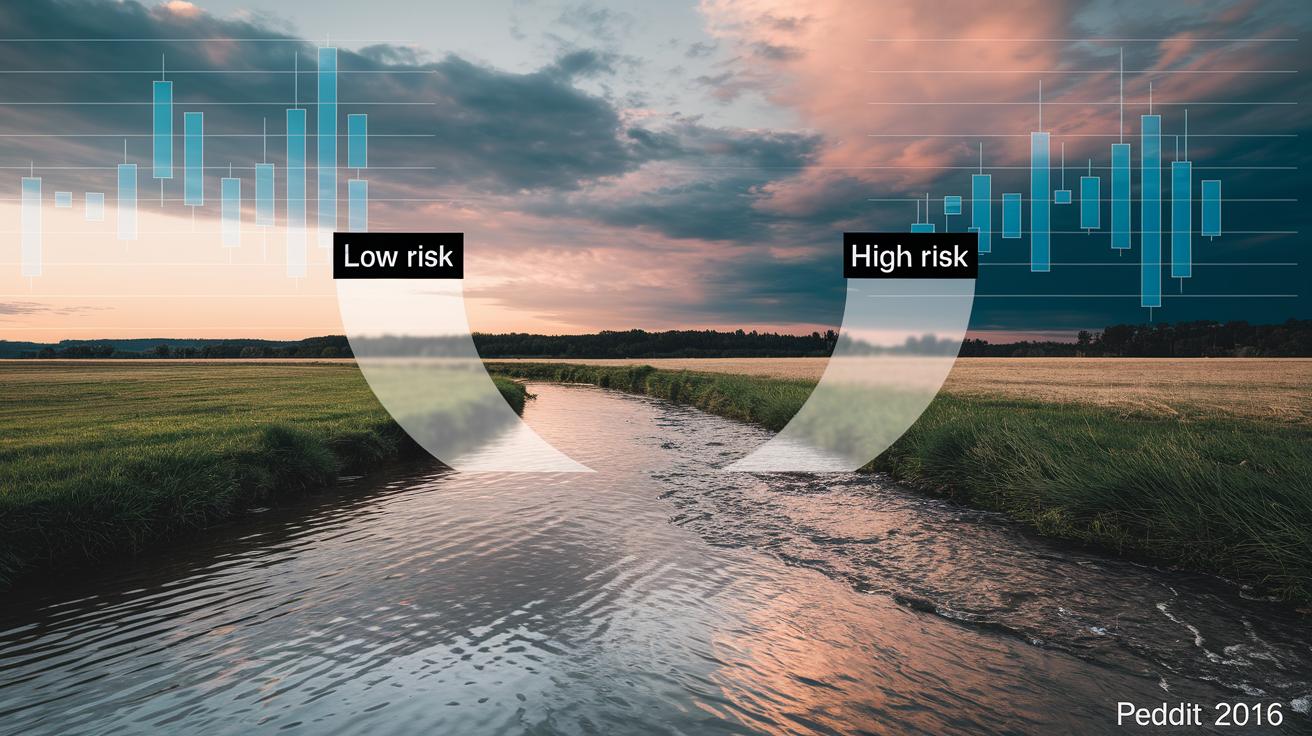
When markets drop, the links between different investments can suddenly jump very high, sometimes over 0.80. It’s like seeing investments that usually move on their own start behaving the same way, almost as if the lines that separate them vanish. In these moments, hidden risks come to light and reveal surprises many investors aren’t ready for. Imagine a quiet stream blending into a wild river; every move by one investment now affects nearly all others, making it harder to spread out risk.
When these high links appear, they also show hidden dangers in your mix of investments. Assets that used to help protect you when prices swung wildly now all move together, increasing overall losses. It can be shocking to discover that what looked like a balanced spread now acts as one vulnerable group. At this point, checking risks carefully and watching for quick changes becomes very important. This close look helps you see when a diverse portfolio turns into a concentrated risk, giving you a chance to adjust before the market shifts even more.
Sector Concentration and Correlation Risks in Modern Markets
Technology now makes up about one-third of the S&P 500. This means many companies move in a similar way, and if tech runs into trouble, a lot of related stocks might suffer too. It’s like watching a big ship hit a rough wave where one dip can affect everything in your investment basket.
Within a single industry, stocks often dance together. When tough times come along, many companies in the same area can drop all at once. Think of it as putting all your eggs in one basket, if that basket trips, every egg is at risk. This setup is especially risky when one sector dominates a large piece of the market.
So, it makes sense to mix things up. Balancing tech with sectors like healthcare, consumer goods, or industrials is like having different flavors in your favorite snack mix. Spreading out your investments can help keep your portfolio steadier when one part of the market stumbles.
Tools and Techniques for Correlation Analysis in Portfolios

When it comes to managing your portfolio, the right software makes a big difference. Many investors rely on trusty programs to crunch the numbers. For instance, Python’s pandas corr() function lets you see how assets move together in a flash, almost like snapping a quick photo of your investment health.
And there’s more to it. Quite a few professionals turn to special analysis platforms that even offer sensitivity checks (a way to see how small changes in the market might affect your risk). Think of it as getting an instant update on what’s working best and what might need a tweak.
If you’re up for doing a bit of coding, languages like Python or R let you create models that fit just right. With only a few lines of code, you can apply forecasting techniques (methods that use past data to predict the future) to gauge things like volatility and covariance. It’s kind of like perfecting a recipe, each small adjustment helps you understand how your assets truly behave.
Dynamic rebalancing is another useful strategy. This means selling off assets that are over-performing and buying ones that are lagging behind to keep a smooth balance. It’s similar to tuning a well-loved engine; swapping out parts that aren’t running as smoothly can keep the whole system humming along nicely.
Regular check-ups, whether quarterly or twice a year, ensure your portfolio stays resilient. By mixing in alternative asset types such as real estate, commodities, or even cash, you add an extra layer of safety. This diverse mix acts like a cushion during those unpredictable market moments.
Final Words
In the action, we explored how asset movements define risk levels and shape your overall portfolio. We broke down the correlation scale and showed how strong links among assets raise overall risk. We discussed blending assets with low or negative links to smooth out volatility and highlighted how market stress can reveal hidden ties that add to risk. We also shared practical methods to compute and monitor these risks. Remember, the role of correlation in portfolio risk empowers you to refine strategies for a secure financial future.
FAQ
What does correlation mean in statistics?
The correlation means telling how two asset prices move together on a scale from –1 to +1. It shows the strength and direction of their relationship.
What is the portfolio correlation formula?
The portfolio correlation formula is computed as the covariance of two asset returns divided by the product of their standard deviations (Pearson r). It mathematically shows asset co-movement.
How does correlation affect portfolio risk and does higher correlation mean higher risk?
The correlation affects portfolio risk by linking asset behaviors. When assets show higher correlation, they tend to drop together, increasing overall risk and portfolio volatility.
Why is correlation important in portfolio management?
Correlation is important because combining assets with lower or negative correlations can reduce drawdowns and overall risk while offering a more stable portfolio.
What is the ideal correlation for a portfolio?
The ideal correlation for a portfolio targets lower or negative values. This mix helps cushion against broad market drops and smooths overall performance.
What are correlation limitations and correlation risk in risk management?
The limitations of correlation include its sensitivity during market stress, where independent assets may start moving together. This hidden linkage can represent a significant risk in portfolio management.
How are asset correlation tables used?
Asset correlation tables list computed correlations between asset pairs. They help investors spot relationships quickly and build diversified strategies to manage risk.