


Have you ever thought about owning a little part of your favorite company? It’s a bit like picking out a small collectible at your local market.
The stock market is where you buy and sell these little pieces called shares. Companies sell shares to collect money and share the rewards of their success. And when you buy a share, you own a small piece of that success.
In this article, we explain what the stock market is, how it works, and why it matters for your everyday money goals.
what are stock markets: Clear, Easy Insights
The stock market is like a busy public gathering where you can buy and sell small pieces of companies. These small pieces, called shares, give you a chance to enjoy a bit of the company’s profits. Companies offer these shares through an IPO (a special event where they invite the public to invest) so they can raise money and grow. Think of it as a company inviting you to be part of its journey, sharing in both the risks and rewards.
Trades happen on familiar platforms such as the NYSE or Nasdaq, where brokers act much like friendly matchmakers. They bring buyers and sellers together by handling various types of orders. For example, a market order lets you buy or sell quickly at the best available price, while a limit order lets you set a specific price and wait until that price is met. This setup helps keep trading simple and efficient.
Companies use the stock market not just to raise money, but also to build trust by being open about their operations. In this way, the stock market serves a dual purpose: it helps companies grow while also giving everyday investors a real chance to be part of economic progress.
Key Elements of Stock Markets: Exchanges, Shares, and Participants
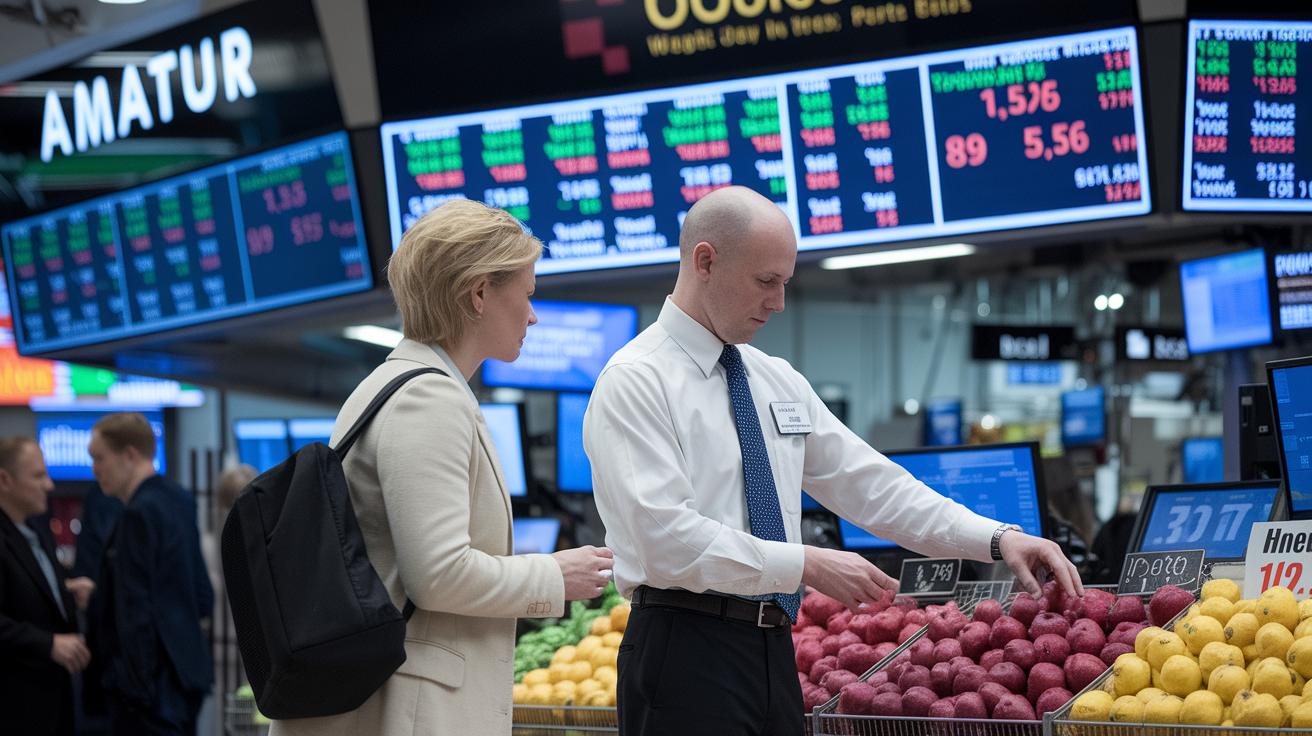
Imagine a busy neighborhood market, but instead of fresh produce, people trade little pieces of companies called shares. Owning a share gives you a small piece of a company and the chance to benefit if it makes a profit later on. At the center of all this is the stock exchange, a digital spot where all the buying and selling orders come together. It’s like visiting your local market where vendors display their best goods.
Brokers act like friendly guides. They help send your orders to the right place. There are two main kinds of orders you should know about. Market orders let you buy or sell immediately at the best available price, much like grabbing your favorite snack straight off the shelf. Limit orders let you set your own price and wait until the price is right, just like holding out for a sale on something you love.
A few important players keep the market running smoothly:
| Player | Description |
|---|---|
| Retail investors | Everyday people investing their hard-earned money |
| Institutional investors | Big organizations investing for many people |
| Market makers | Firms that continuously offer prices to keep the market active |
| Broker-dealers | Experts who complete trades on behalf of others |
| High-frequency traders | Computer systems that quickly spot and act on small price differences |
All these parts work together smoothly to make trading efficient and safe. This teamwork helps companies grow and opens up opportunities for investors.
The Historical Evolution of Stock Markets
Back in 1602, Amsterdam became the birthplace of the first official stock market when the Dutch East India Company offered shares for sale. Imagine a busy marketplace where people traded the promise of future profits, those early shares were little invitations to join a company’s growing adventure.
Over time, trading evolved from face-to-face huddles on noisy floors to the smooth, digital transactions we enjoy today. In the days before computers took over, traders would shout orders across crowded rooms. Then, technology stepped in, and the steady hum of computers replaced the constant chatter, a shift that truly changed the game.
Market crashes in 1929 and 1987 made investors worry, and these big events led to stronger rules and safety measures. Soon, regulatory bodies like the U.S. Securities and Exchange Commission were formed to help keep trading secure for everyone.
Major Global Stock Markets and Their Features

Stock markets around the world are busy hubs where people buy and sell tiny pieces of companies, these pieces are called shares. They show us how well the economies are doing in different regions. In the United States, the New York Stock Exchange and Nasdaq stand out because they have lots of cash moving around (what traders call liquidity) and even offer long trading hours so orders get matched quickly.
Over in Europe, the London Stock Exchange impresses with its long history and steady performance. And in Asia, the Shanghai Stock Exchange and Hong Kong Exchanges & Clearing are key spots for both local and international investors. Each of these markets has its own story and size, which makes them important places for smart investment choices.
| Exchange | Founded/Launched | Market Cap |
|---|---|---|
| NYSE | 1792 | ~$27 trillion |
| Nasdaq | 1971 | ~$19 trillion |
| Shanghai Stock Exchange | 1990 | ~$6 trillion |
| London Stock Exchange | 1801 | ~$4 trillion |
| HKEX | 1986 | ~$5 trillion |
These markets are not only different in age but also in how they work day-to-day. For example, the NYSE and Nasdaq give traders extra time and lots of trading cash, while European and Asian exchanges often move in tune with their local economies and investor moods. Checking out their market capitalizations helps paint a picture of their size and impact in global finance.
Every market offers its own benefits. The NYSE and Nasdaq give equal parts speed and money flow, the London Stock Exchange offers European stability, and Shanghai along with HKEX provide a taste of Asia’s fast-growing scene. All this helps guide investors to make smart choices for lasting success.
How to Invest in Stock Markets: Beginner’s Guide
Investing in the stock market can feel like starting a simple adventure. First, you open an investment account with a broker, like Fidelity or Schwab, sometimes even with just $1. Think of your account as a gateway to a big marketplace where you can buy small pieces of companies.
Once your account is set up, you decide on a strategy. Do you want long-term investing for steady growth over time? Or maybe you enjoy active trading, buying and selling more often to catch quick price changes. You might also lean toward a passive approach with index funds, which means owning tiny pieces of several companies at once.
Using a reliable trading platform on your computer or phone makes placing orders really straightforward. When you buy or sell, you select an order type. A market order is like grabbing a fresh apple from the stand right away, while a limit order lets you wait until you see that perfect price. There’s even a chance to check out more smart investing ideas at this link: smart investing.
To get started, you can follow these simple steps:
- Choose a brokerage and open your investment account.
- Deposit some funds into your account.
- Pick a trading strategy that matches your goals.
- Research individual stocks or ETFs (these are funds that trade like stocks).
- Place your order using either a market or limit order.
- Keep an eye on your investments and adjust when needed.
Risks and Opportunities in Stock Markets

Stock prices can change very quickly. When companies share earnings reports or when economic data and central bank policies shift, you might suddenly see your portfolio drop right after a big news release. That's market volatility in action (volatility means rapid price changes).
Sometimes these swings can seem a bit scary. But if you look at historical trends, stocks have often given you more in returns over the long run than the interest from a traditional savings account. Just remember, past performance doesn’t guarantee future results.
Investing in stocks does come with risks. For instance, during market downturns, selling shares can become tricky because there aren’t enough buyers (this is called a liquidity issue). Then there are systemic shocks that can affect many stocks at once. Here’s an interesting fact: in one wild trading day, swift changes in sentiment can lead to rapid sell-offs, much like a sudden rain shower soaking everyone unexpectedly.
At the same time, there are plenty of opportunities. Spreading your investments across different sectors, known as diversification, can help spread out the risk. Tools like position sizing (deciding how much to invest in one stock) and stop-loss orders (automated orders to sell when prices drop too low) can protect your investments and keep your portfolio on track.
Final Words
In the action, we looked at how stock markets work, from understanding what are stock markets to the structure of shares, exchanges, and key players. We shared basics on investing, risk management, and past milestones that shape today's markets. This article touched on practical tips for informed investing and maintaining a secure financial outlook. All of these points help make money management straightforward. It’s good to know that with smart strategies, you can confidently manage your finances and see solid growth ahead.
FAQ
What are stock markets today, what is stock market in simple words, and what is a stock market short definition?
The stock market is a place where company shares are bought and sold. It gives companies a way to raise money and offers people a chance to invest in business growth.
What is a stock market example?
A stock market example is the New York Stock Exchange, where companies list shares and investors trade them, showing how companies raise capital and individuals can invest in established brands.
What is trading in the stock market?
Trading in the stock market means buying or selling company shares through brokers on exchanges. It lets people invest and potentially earn profits from share price changes.
What is the importance of the stock market?
The stock market is important because it helps companies raise funds for growth, while giving everyday people a chance to invest in businesses for future financial benefits.
What are stock markets and how do they work?
Stock markets work as platforms where buyers and sellers meet via brokers. They allow companies to raise money through IPOs and offer a venue for trading shares among investors.
What are the types of stock markets?
Stock markets include primary markets, where companies issue new shares through IPOs, and secondary markets, where existing shares are traded among investors.
What are stock markets for beginners and how do beginners understand the stock market?
For beginners, stock markets are platforms for buying and selling parts of companies. Opening a brokerage account and learning basic trades help make the process clear and approachable.
Who owns 90% of the stock market?
When people mention that 90% of the stock market is owned, they typically refer to large institutional investors who manage vast amounts of money rather than one individual owning most of the shares.